
Strategic Procurement
Real Estate Procurement: Digitising Construction Procurement at Scale
How a leading real estate developer transformed construction procurement across 20+ projects, from Excel-based BOQs to 16,000+ RFQs.

Key takeaways
- Real estate procurement becomes increasingly complex as projects, suppliers, and procurement volumes grow.
- Construction procurement is one of the most critical execution layers within the broader real estate procurement process.
- Excel-based BOQs can create version-control issues and disconnect project requirements from sourcing.
- Aerchain connects BOQs directly with digital sourcing and RFQs.
- Digital RFQs create a standardized sourcing process across projects.
- Centralized dashboards give teams visibility across multiple active projects.
- PR-to-PO automation reduces repetitive purchasing work.
- Automated vendor validation creates a more consistent supplier compliance process.
- Three-way matching connects purchase orders, goods receipts, and invoices.
Real estate procurement does not happen in isolation.
Every project brings its own set of materials, suppliers, contractors, purchase requirements, approvals, invoices, and deadlines. As the number of projects grows, so does the complexity of keeping procurement aligned with project execution.
For a leading Indian real estate developer managing more than 20 residential and commercial projects, procurement had reached significant scale.
The organization was managing 9,000 vendors, 16,000+ RFQ events, ₹1,500 to ₹2,000 Cr in spend, 9,000+ purchase orders, and more than 1 lakh invoices.
The challenge was no longer simply about buying better.
It was about creating a connected real estate procurement process that could support construction procurement across multiple projects while bringing sourcing, supplier management, purchasing, compliance, and invoice processing into one workflow.
That is where Aerchain helped bring structure to the entire procurement lifecycle.
Why real estate procurement becomes complex at scale
A real estate project may begin with a requirement on paper, but that requirement quickly becomes a chain of procurement decisions.
The questions behind every requirement
What needs to be purchased? Who should supply it? What price should the organization pay? Has the supplier been validated? Has the purchase requisition been approved? Has the purchase order been released? Were the goods actually received? Does the invoice match what was ordered and received?
For a single project, managing these questions can already involve multiple teams.
Now multiply that across 20+ residential and commercial projects.
The result is not simply more procurement activity. It is a much larger coordination problem.
In this case, the organization was managing 500+ users and end users, 9,000 vendors, 16,000+ RFQs, 9,000+ POs, 6,000+ validated vendors, and 1,03,218 invoices.
| 20+ | Residential and commercial projects |
| 500+ | Users and end users |
| 9,000 | Vendors |
| 6,000+ | Validated vendors |
| 16,000+ | RFQ events |
| 9,000+ | Purchase orders |
| 1,03,218 | Invoices |
| ₹1,500+ Cr | Spend managed (₹1,500 to ₹2,000 Cr) |
At that scale, real estate procurement needs to operate as a connected system rather than a collection of project-level activities.
The hidden cost of fragmented real estate procurement
Before procurement becomes a technology problem, it often becomes a coordination problem.
Teams spend time on:
- Bid analysis
- Supplier follow-ups
- BOQ management
- PR-to-PO conversion
- Vendor validation
- Invoice matching
- Consolidating procurement information across projects
The underlying issue is fragmentation.
BOQs may sit in spreadsheets. Supplier information may exist across different systems. RFQs may be managed differently by different teams. Procurement leaders may have limited visibility into active sourcing events. And project teams may have to follow up manually to understand where a requirement stands.
For a developer managing multiple projects simultaneously, the question becomes:
How do you maintain procurement control when every project has activity happening at the same time?
The answer starts by connecting the requirement to the procurement process.
1. BOQ-based sourcing connects project requirements to procurement
In construction, the Bill of Quantities is not simply a spreadsheet containing material requirements.
It is one of the most important starting points for procurement.
But when BOQs are managed manually, version control can become difficult. Teams may also need to repeatedly move information from project spreadsheets into procurement workflows.
Aerchain introduced BOQ-based sourcing to create a more direct connection between project requirements and procurement.
BOQs could be created and versioned within the platform and then used to create sourcing events.
The workflow becomes:
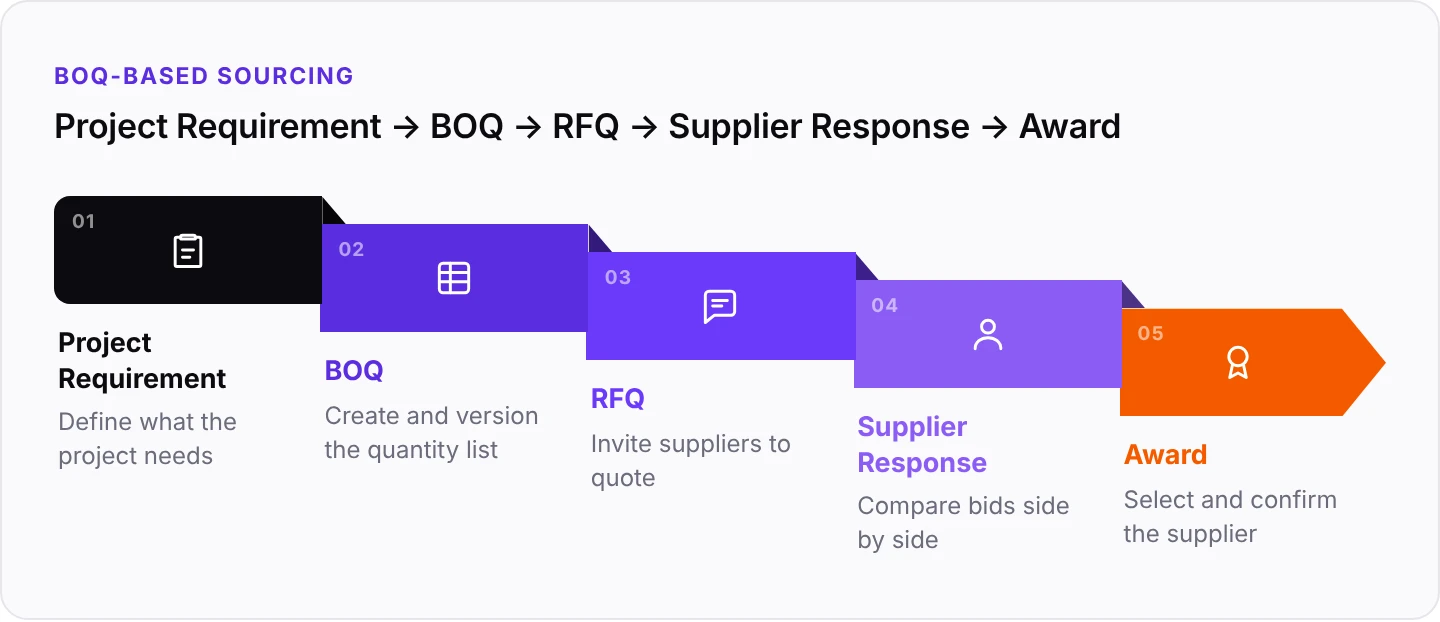
This means procurement teams can work from the approved project requirement instead of repeatedly recreating information at different stages.
For real estate developers, that creates a more structured foundation for construction procurement across projects.
2. Digital RFQs bring consistency to construction sourcing
Once the BOQ is ready, the next question is how efficiently the requirement can be sourced.
With 16,000+ RFQ events, sourcing itself becomes a major operational workload.
Every RFQ can involve supplier participation, quote collection, evaluation, comparison, and follow-up.
When managed manually, procurement teams can spend significant time coordinating the process rather than focusing on sourcing decisions.
Aerchain's Digital RFQ and Benchmarking capabilities provide a standardized workflow for managing RFQs and supplier responses.
Instead of every project following a different process, teams can work through a common digital workflow.
This creates greater consistency across projects and procurement categories while giving teams better visibility into sourcing activity.
3. Real estate procurement needs visibility across projects
Managing procurement for one project is different from managing procurement for an entire real estate portfolio.
Leadership needs answers to questions such as:
- Which sourcing events are active?
- Which projects have pending procurement activities?
- Where are approvals delayed?
- How much spend is being managed?
- Which suppliers are participating?
- What is happening across sourcing pipelines?
Without centralized visibility, these answers may require information to be collected from different teams and systems.
Aerchain provides live dashboards that give management visibility into sourcing activity across active projects.
Instead of manually consolidating procurement information, teams can monitor activity through a centralized view.
The value is not simply better reporting.
It is the ability to make procurement decisions while projects are still moving.
4. PR-to-PO automation connects procurement with project execution
Sourcing is only one part of real estate procurement.
Once a requirement is approved, it needs to move toward purchasing.
When PR-to-PO conversion is heavily manual, procurement teams spend time on repetitive administrative tasks. At the same time, project and finance teams have less visibility into how quickly approved requirements are moving toward purchase orders.
Aerchain helped automate this process through rule-based PR-to-PO workflows.
The process becomes:
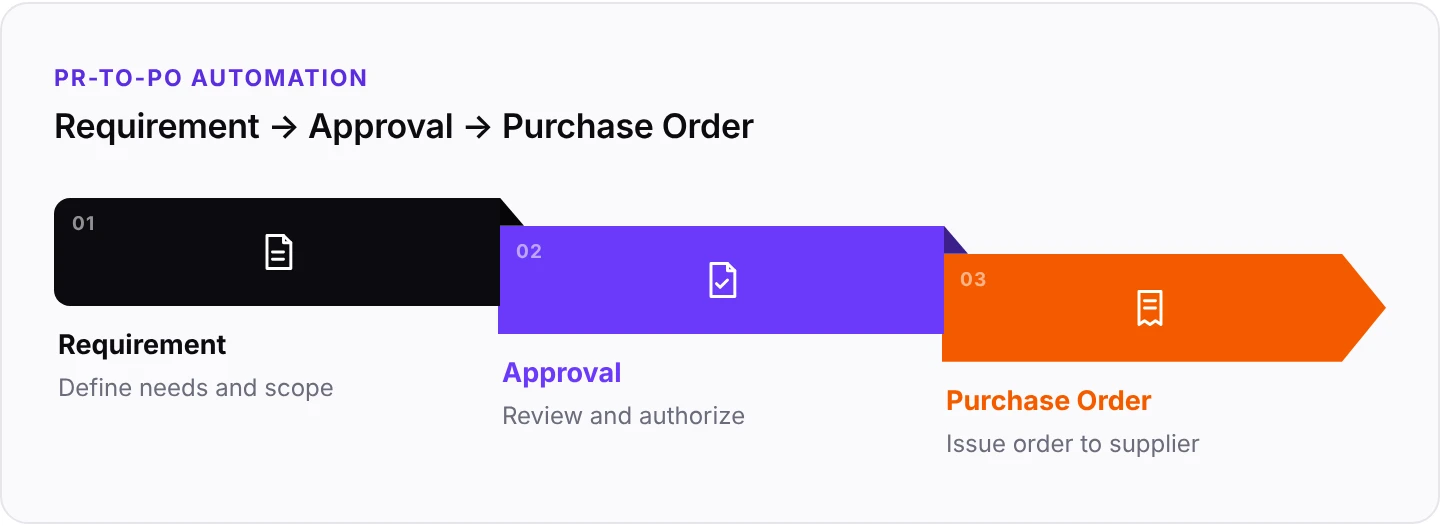
Approved purchase requisitions can move through defined rules toward PO creation.
For real estate developers, this helps connect project requirements with purchasing execution while reducing unnecessary manual handoffs.
5. Supplier management becomes critical at 9,000 vendors
Real estate projects depend on a broad supplier ecosystem: material suppliers, contractors, subcontractors, service providers, and other vendors supporting project execution.
For this organization, that meant managing 9,000 vendors.
At this scale, supplier management cannot rely entirely on manual verification.
- GST details need to be checked.
- PAN information needs to be validated.
- MSME status may need to be verified.
- Bank information needs to be confirmed.
Aerchain supports automated validation of key vendor information, including GST, PAN, MSME, and bank verification.
The organization had 6,000+ vendors validated through this process.
This makes supplier compliance part of the procurement workflow rather than a separate administrative exercise.
6. Real estate procurement does not end at the purchase order
A purchase order is not the end of procurement.
The goods or services still need to be received. The invoice still needs to be checked. And finance needs confidence that what was invoiced matches what was ordered and received.
For an organization processing more than 1,03,218 invoices, this becomes a significant part of the procurement lifecycle.
Aerchain supports three-way matching across the purchase order, goods receipt note, and invoice.
The process connects:
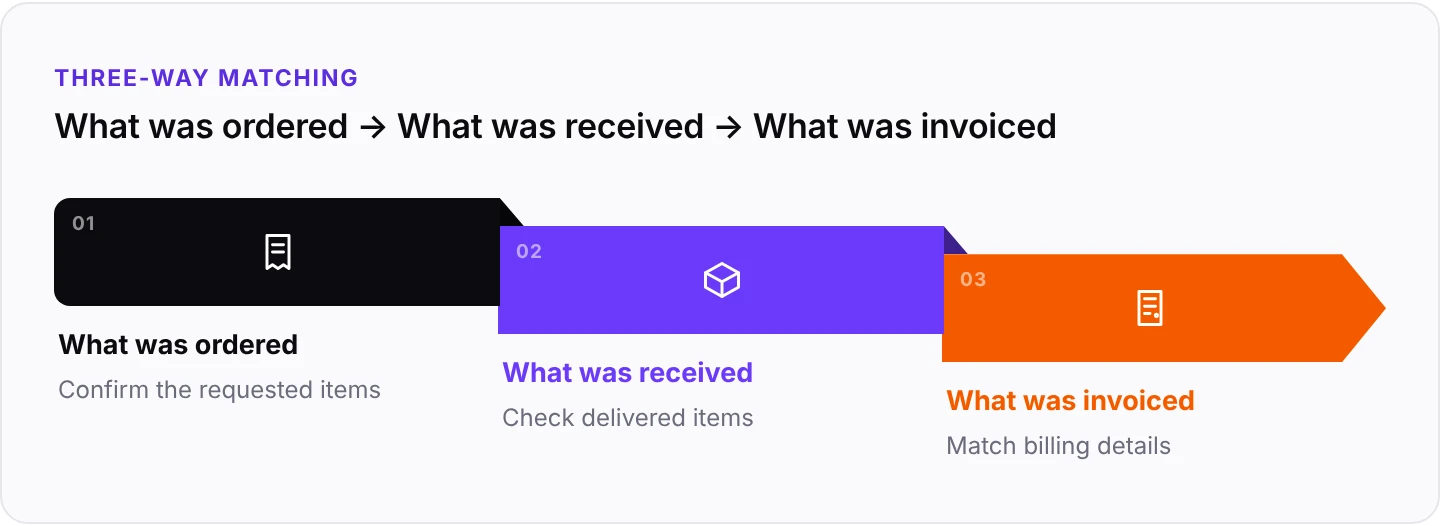
This creates stronger controls before payment release and a clearer digital audit trail.
The result is a connected procurement lifecycle:

What changes with Aerchain?
The transformation is not about digitizing one part of real estate procurement.
It is about connecting the entire procurement lifecycle.
Structured BOQ-based sourcing
Project BOQs can be created, versioned, and connected directly to sourcing events.
Digital RFQ management
Procurement teams can manage RFQs and supplier responses through a standardized workflow.
Real-time procurement visibility
Management gets a centralized view of sourcing activity across 20+ active projects.
Automated purchasing workflows
Rule-based PR-to-PO automation helps reduce repetitive work and align purchasing with approved requirements.
Standardized supplier compliance
Vendor validation supports consistent GST, PAN, MSME, and bank verification.
Connected invoice processing
Three-way matching connects purchase orders, goods receipts, and invoices.
Better auditability
Sourcing events, approvals, purchase orders, goods receipts, and invoices are digitally recorded.
These capabilities bring together the broader real estate procurement function with the day-to-day requirements of construction procurement.
From project-level procurement to a connected operating model
The bigger shift is not simply from spreadsheets to software.
It is from fragmented procurement to a connected operating model.
- Project requirements become BOQs.
- BOQs become sourcing events.
- Sourcing events become supplier decisions.
- Supplier decisions become purchase orders.
- Purchase orders connect to goods receipts and invoices.
Every stage creates a digital procurement record.
For a developer managing 20+ active projects, 9,000 vendors, 16,000+ RFQ events, and ₹1,500 to ₹2,000 Cr in managed spend, this visibility becomes part of procurement governance.
And that is where real estate procurement and construction procurement come together.
The goal is not simply to automate buying.
It is to create a procurement process that can keep pace with the way real estate projects actually operate.
What is real estate procurement?
Real estate procurement is the process of sourcing and purchasing the materials, products, services, contractors, and other requirements needed to develop and operate real estate projects.
It can include sourcing, BOQ management, supplier selection, negotiations, purchase orders, approvals, vendor compliance, goods receipts, invoice processing, and procurement governance.
What is construction procurement?
Construction procurement is the process of sourcing the materials, products, services, contractors, and subcontracted work required to execute a construction project.
It typically includes BOQ management, RFQs, supplier selection, purchase orders, goods receipts, invoice processing, and supplier compliance.
How are real estate procurement and construction procurement connected?
Real estate procurement is the broader procurement function supporting a developer's projects, while construction procurement focuses on the requirements needed for project execution.
They connect through workflows such as:
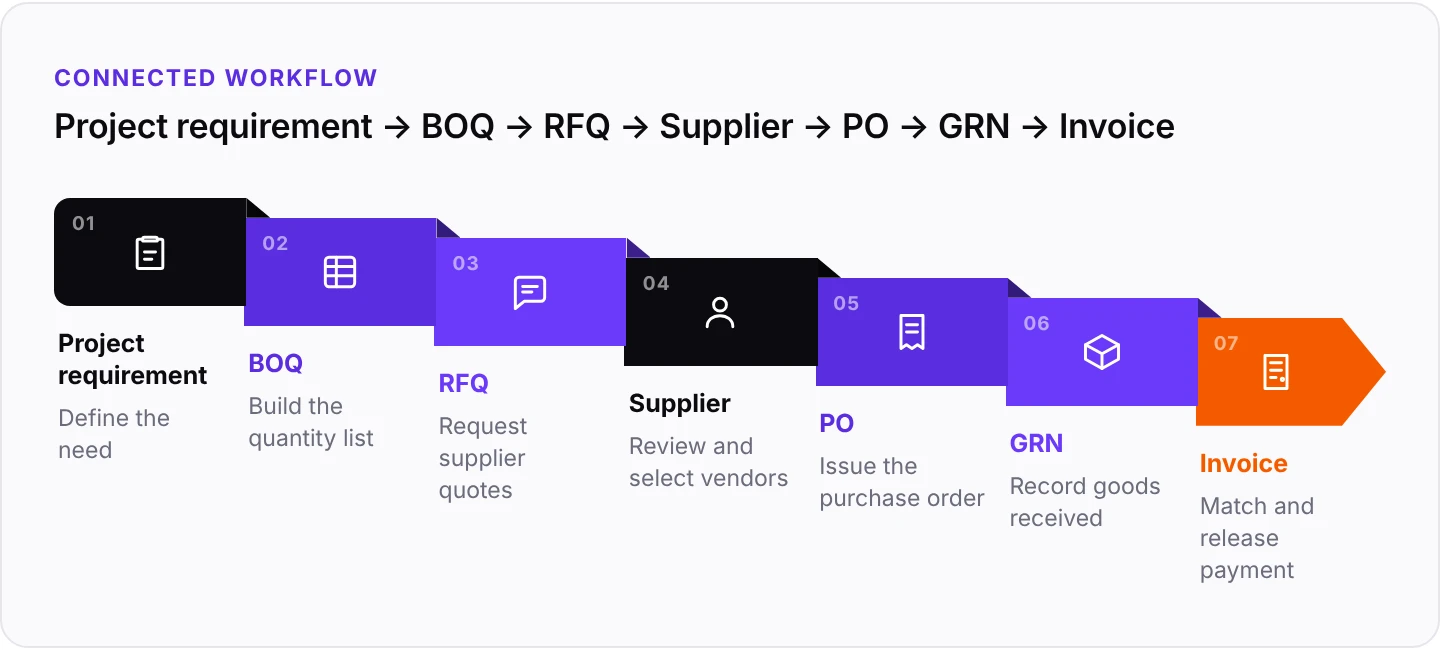
Connecting these stages can give developers greater visibility and control across their project portfolio.
Conclusion
Real estate procurement becomes difficult when every project has its own process, every BOQ lives in another spreadsheet, and every procurement decision requires another manual handoff.
The transformation in this case was about connecting those activities.
- BOQs became digital.
- RFQs became standardized.
- Supplier validation became structured.
- PR-to-PO became automated.
- Invoices became system-matched.
And procurement activity across 20+ projects became visible through one platform.
For real estate developers managing complex projects, large supplier ecosystems, and significant procurement spend, the opportunity goes beyond procurement automation.
It is about building a real estate procurement operating model that connects construction procurement with the rest of the project lifecycle and scales with the portfolio.
Frequently asked questions
What are the biggest challenges in real estate procurement?
Common challenges include fragmented procurement processes, Excel-based BOQ management, limited visibility across projects, manual RFQ and purchase order workflows, supplier compliance, and invoice processing.
These challenges become more complex as the number of projects, suppliers, and procurement events increases.
How can real estate developers improve procurement efficiency?
Developers can improve procurement efficiency by digitizing BOQs, standardizing RFQs, centralizing supplier information, automating vendor validation, connecting PRs to POs, and implementing invoice matching.
A connected procurement workflow can reduce repetitive manual work while giving procurement and project teams better visibility.
What is BOQ-based procurement?
BOQ-based procurement uses the Bill of Quantities as the foundation for sourcing construction materials, products, and services.
A digital BOQ workflow allows project requirements to be created and versioned and then connected directly to sourcing events.
How does BOQ-based sourcing help real estate developers?
BOQ-based sourcing connects project requirements directly with procurement activities.
It can reduce dependency on spreadsheets, improve version control, standardize sourcing, and make it easier to create RFQs based on approved project requirements.
What is real estate procurement software?
Real estate procurement software is a digital platform used to manage procurement activities across real estate and construction projects.
Depending on the platform, it can support BOQ sourcing, RFQ management, supplier management, purchase orders, approvals, vendor compliance, invoice matching, analytics, and ERP integration.
What should developers look for in real estate procurement software?
Developers should evaluate whether the platform supports BOQ-based sourcing, digital RFQs, supplier management, vendor compliance, PR-to-PO automation, purchase order management, invoice matching, ERP integration, project-level visibility, and digital audit trails.
How can real estate developers manage procurement across multiple projects?
A centralized procurement platform can help developers standardize sourcing processes while maintaining visibility across individual projects.
Dashboards, supplier management, digital RFQs, purchasing workflows, and ERP integration can provide a common procurement process across the project portfolio.
How does digital RFQ management help construction procurement?
Digital RFQ management allows procurement teams to create, distribute, manage, and evaluate requests for quotation through a centralized platform.
For construction procurement, connecting RFQs directly to BOQs and project requirements can create a more structured sourcing process.
How can real estate companies manage large supplier networks?
Real estate companies can use centralized supplier management, standardized onboarding, automated compliance checks, and digital sourcing workflows.
This helps maintain more consistent supplier information across projects and reduces dependence on manual verification.
What is three-way matching in real estate procurement?
Three-way matching compares the purchase order, goods receipt, and supplier invoice before payment is released.
It helps procurement and finance teams verify that what was ordered was received and that the invoice matches the purchase order.
How can procurement automation help real estate developers?
Procurement automation can reduce repetitive work across BOQ sourcing, RFQ management, PR-to-PO conversion, supplier validation, and invoice matching.
This allows procurement teams to spend more time on sourcing decisions, supplier management, and project requirements.
How can real estate procurement improve project cost control?
Real estate procurement can support cost control by connecting approved project requirements with sourcing and purchasing workflows.
Supplier benchmarking, centralized sourcing visibility, budget-aligned purchasing workflows, and invoice matching can provide greater control over procurement activity.
How can real estate developers improve procurement visibility?
Developers can improve procurement visibility by centralizing sourcing and purchasing data and providing dashboards across projects.
This allows teams to monitor RFQs, procurement pipelines, purchase orders, supplier activity, and spend through a common platform.

Ready to Source Autonomously with Aerchain?
Explore the power of AI Agents in transforming procurement processes.