
Strategic Procurement
How a Large Retail Organization Strengthened Its Retail Supply Chain
Inside the transformation of a large retail organization managing 40,000 buyers, 50,000+ end users, 4 lakh+ suppliers, and 20,000+ plants and locations.

Key takeaways
- Standardizing procurement workflows can improve consistency across a large retail supply chain.
- Centralized RFQ management gives procurement teams greater visibility into sourcing activity.
- Structured negotiations and reverse auctions can make supplier competition easier to manage.
- Governed award workflows provide greater visibility and control over supplier decisions.
- ERP integration helps connect sourcing decisions with downstream purchasing.
- Supplier and product master-data integration supports better consistency across procurement processes.
A retail supply chain becomes increasingly difficult to manage when procurement operates across thousands of locations, tens of thousands of buyers, and hundreds of thousands of suppliers. At this scale, procurement decisions can have a direct impact on supplier relationships, purchasing efficiency, cost control, and supply continuity.
For this large retail organization, the challenge was to create a more consistent and connected way to manage sourcing. The organization wanted to bring RFQs, supplier participation, negotiations, awards, purchasing, and master data into a structured Source-to-Award process, while continuing to work with its existing SAP ECC environment.
Why retail supply chain procurement becomes difficult at enterprise scale
A procurement process that works for a smaller organization can become difficult to manage when it needs to support thousands of buyers, suppliers, locations, and sourcing events. Teams need a clear view of active RFQs, supplier responses, negotiations, approvals, awards, and what happens after a sourcing decision is made.
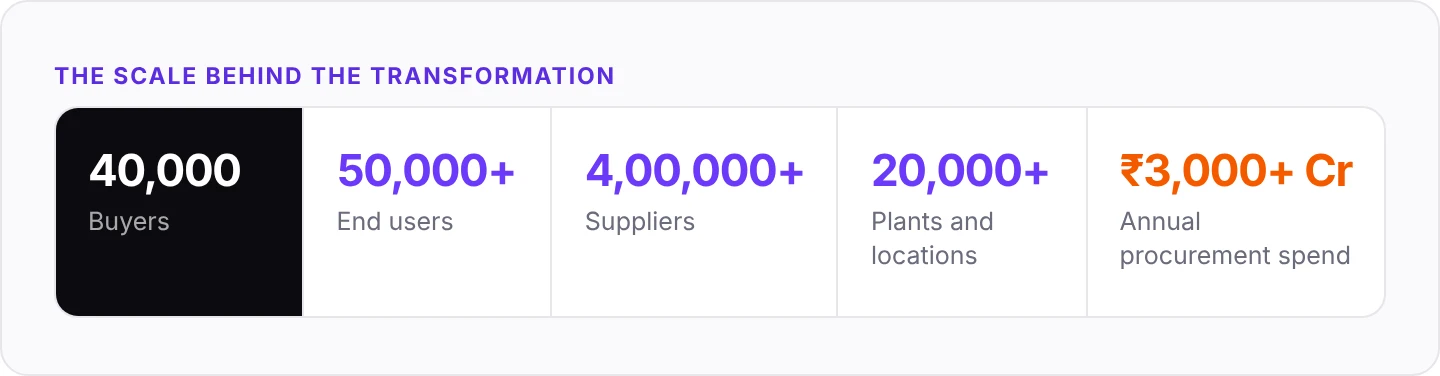
For this organization, procurement was operating at a significant scale:
| Procurement scale | Volume |
|---|---|
| Buyers | 40,000 |
| End users | 50,000+ |
| Suppliers | 4,00,000+ |
| Plants and locations | 20,000+ |
| Annual procurement spend | ₹3,000+ Cr |
| Average PRs per day | 30 |
| Average RFQs per day | 30 |
| ERP system | SAP ECC |
At this scale, simply digitizing individual procurement activities is not enough. The organization needed a more connected operating model that could bring sourcing, supplier engagement, negotiations, awards, approvals, purchasing, and procurement data together.
1. Creating visibility across thousands of sourcing events
In a large retail organization, sourcing requirements can come from different categories, business units, and locations. When RFQs are managed through emails, spreadsheets, and disconnected systems, it becomes harder for procurement teams to understand which events are active, which suppliers have responded, and where approvals or negotiations are pending.
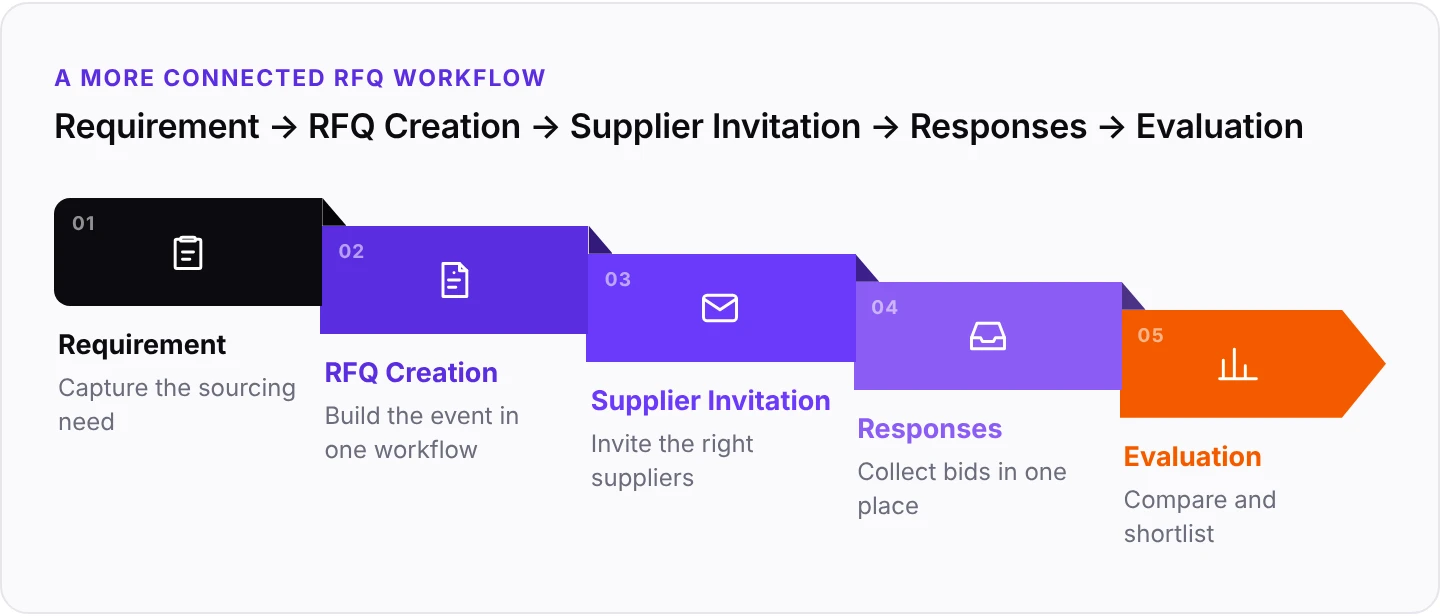
The organization needed a standardized way to create, manage, and track sourcing events. The objective was not simply to move RFQs online, but to create a common workflow that buyers and procurement teams could use across the organization.
Bringing RFQ management into one workflow
The organization introduced a centralized RFX workflow through Aerchain, allowing procurement teams to create sourcing events, invite suppliers, manage responses, and track RFQ activity from a common platform.
This gave buyers a more consistent process while giving procurement teams greater visibility into sourcing activity across locations. It also created a clearer foundation for the next stages of supplier evaluation and negotiation.
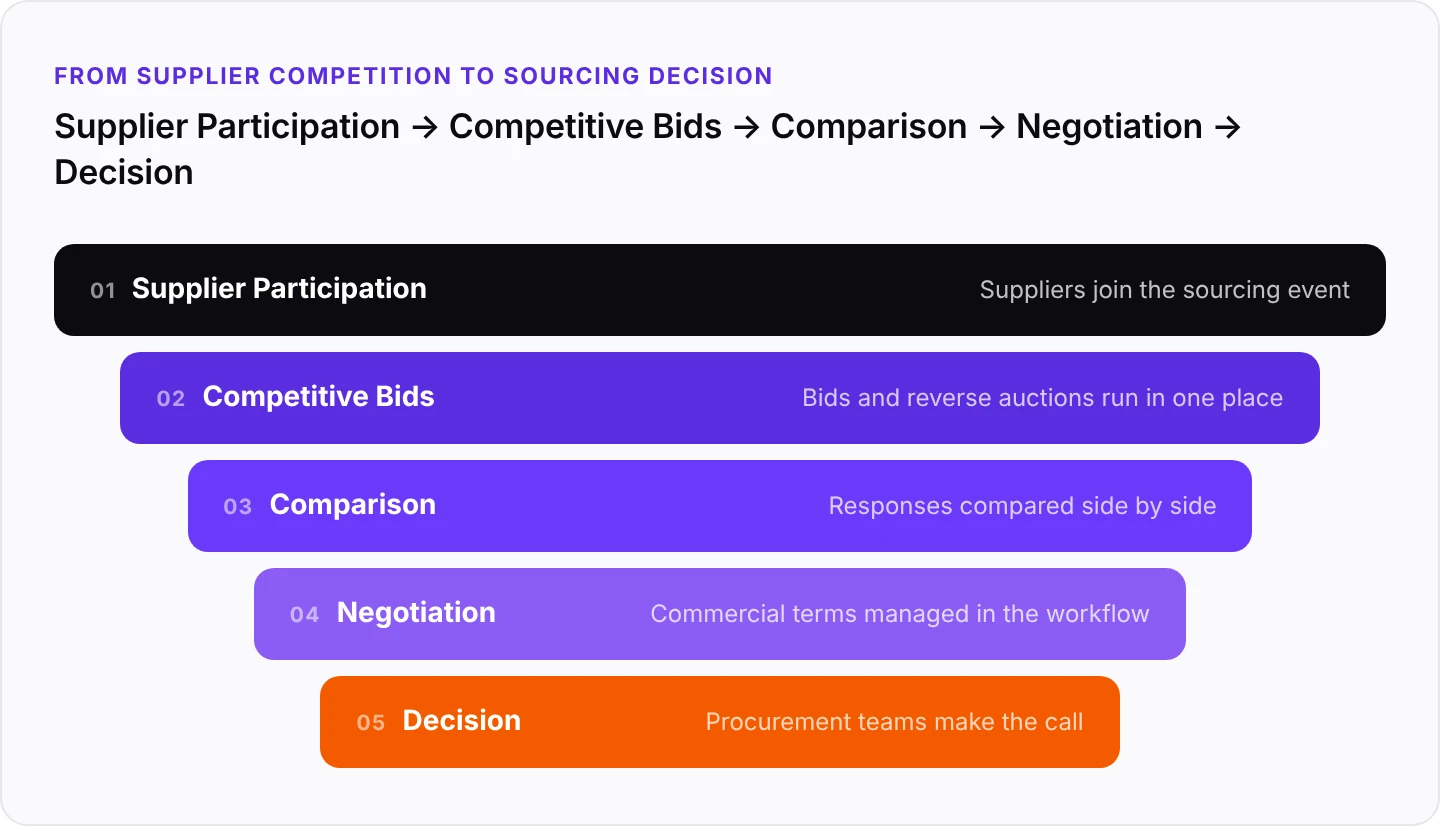
2. Managing supplier competition at scale
Having a supplier base of more than 4,00,000 suppliers creates significant sourcing potential, but supplier volume alone does not guarantee competitive outcomes. Procurement teams still need a structured way to invite suppliers, compare bids, negotiate terms, and make informed sourcing decisions.
The organization therefore looked at ways to make supplier competition more structured and transparent. Instead of managing bidding and negotiations through separate channels, these activities could be brought into the sourcing workflow.
Structuring reverse auctions and negotiations
Using Aerchain's Reverse Auction and Negotiation Management, procurement teams could manage competitive bidding and negotiations within the sourcing process.
The approach gave teams a more organized way to compare supplier responses, conduct competitive events, and manage commercial discussions. Rather than positioning the technology as a replacement for procurement judgment, it provided a structured environment in which procurement teams could make those decisions.
3. Making supplier awards more governed
Supplier selection is an important decision in any procurement process, but governance becomes more important when decisions involve multiple stakeholders, business units, and approval levels.
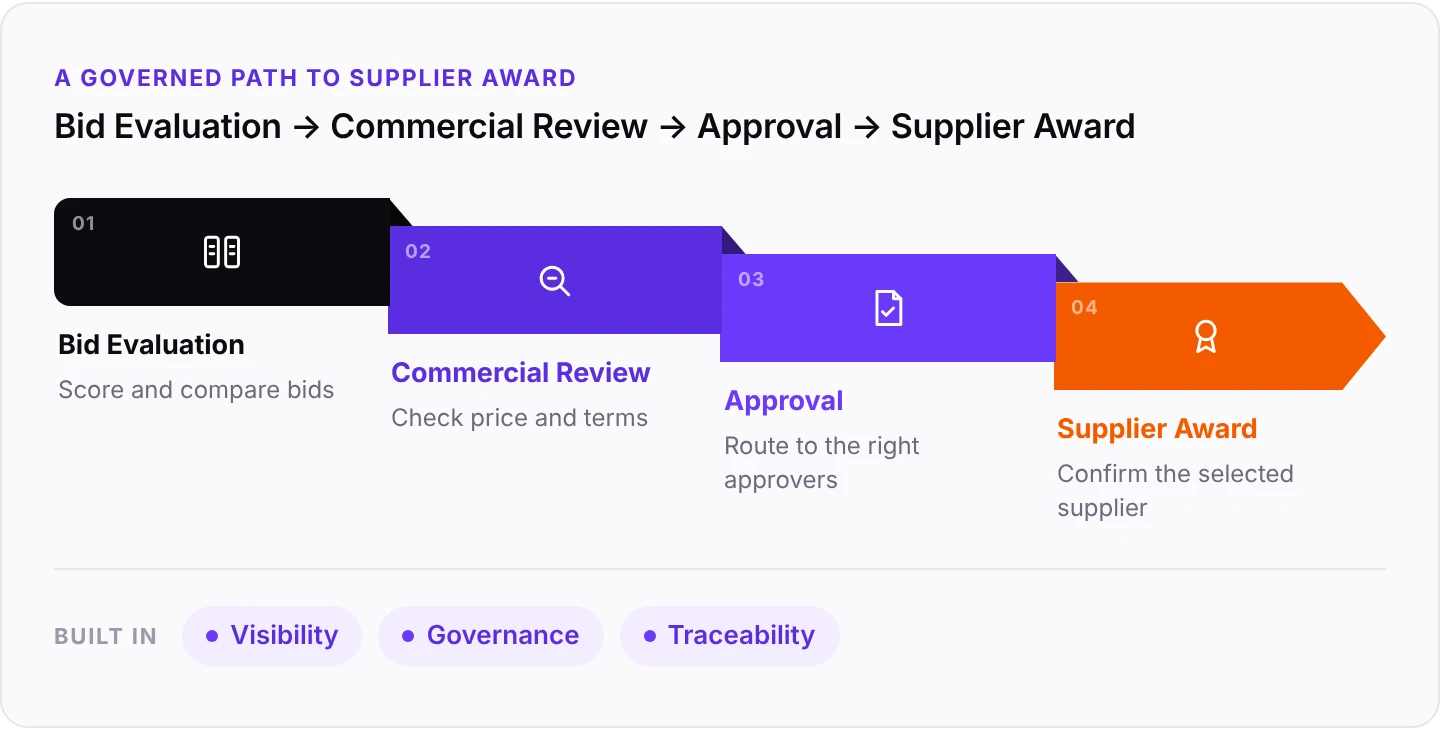
For the organization, the objective was to create a clearer transition from bid evaluation to supplier selection. This meant giving procurement teams greater visibility into the award process while maintaining the appropriate controls around supplier decisions.
A structured award process
With Award Management in Aerchain, supplier selection could be managed through a defined workflow rather than being treated as a separate final step after sourcing.
The process connected bid evaluation, decision-making, approvals, and supplier award more closely. This helped create greater traceability while keeping procurement teams involved in the final decision.
4. Connecting sourcing with purchase order execution
A supplier award is not the end of the procurement process. Once a supplier has been selected, the sourcing decision needs to move into purchasing and execution.
For this organization, connecting the sourcing workflow with SAP ECC was therefore an important part of creating continuity between Source-to-Award and downstream procurement activities.
From sourcing decision to purchase order
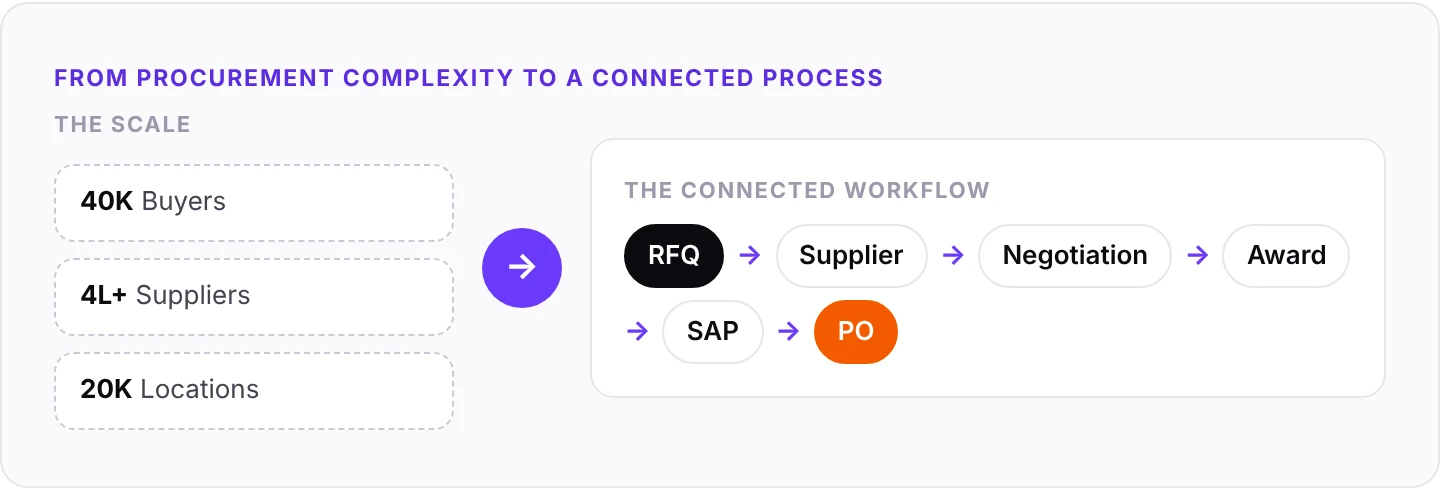
Through SAP PO Integration, the organization could connect sourcing outcomes with SAP ECC for downstream purchase order execution.
The workflow became:
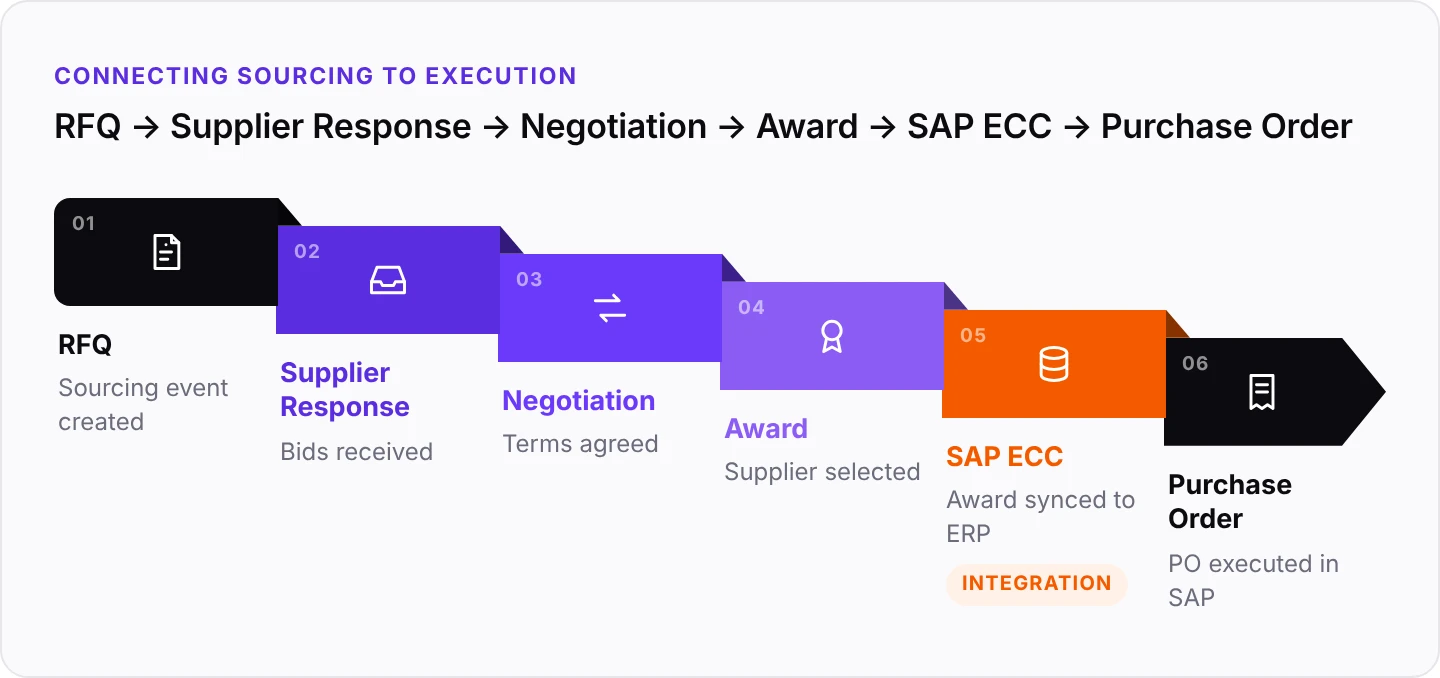
This reduced the need for manual handoffs between sourcing and purchasing and created a clearer connection between the commercial decision and its execution.
For a large retail supply chain, this continuity matters because the value of a sourcing decision ultimately depends on how efficiently it moves into the purchasing process.
5. Keeping supplier and product data consistent
Procurement decisions depend on reliable supplier and product information. When this information is inconsistent across systems, procurement teams may spend additional time correcting records, maintaining data manually, or resolving discrepancies.
For an organization managing more than 4,00,000 suppliers, maintaining consistent supplier and product information becomes particularly important.
Connecting supplier and product master data
The organization used Aerchain's Supplier Master and Product Master Integration to connect supplier and product information with procurement workflows.
This supported:
- More consistent supplier information
- More consistent product information
- Reduced manual data maintenance
- Better procurement data quality
- Greater continuity between sourcing and purchasing
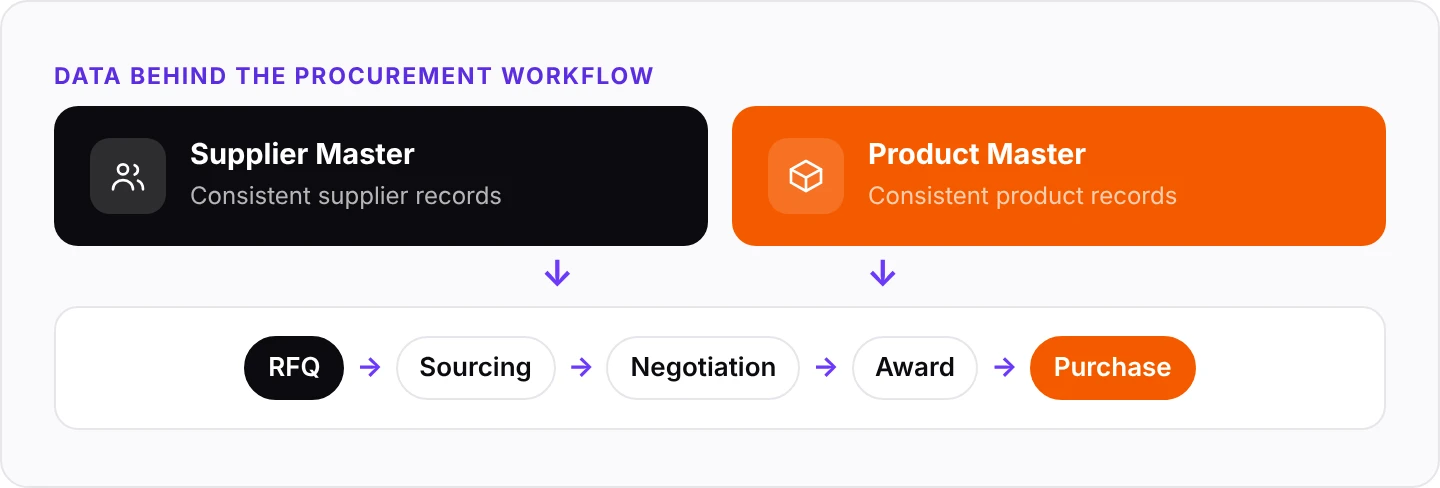
Rather than treating master data as a separate technical concern, the approach made data consistency part of the wider procurement and retail supply chain process.
What changes with a connected retail supply chain procurement process?
The transformation was not about introducing technology into one isolated procurement activity. The larger opportunity was to connect the different stages of sourcing so that buyers, suppliers, procurement teams, and purchasing systems could work through a more consistent process.
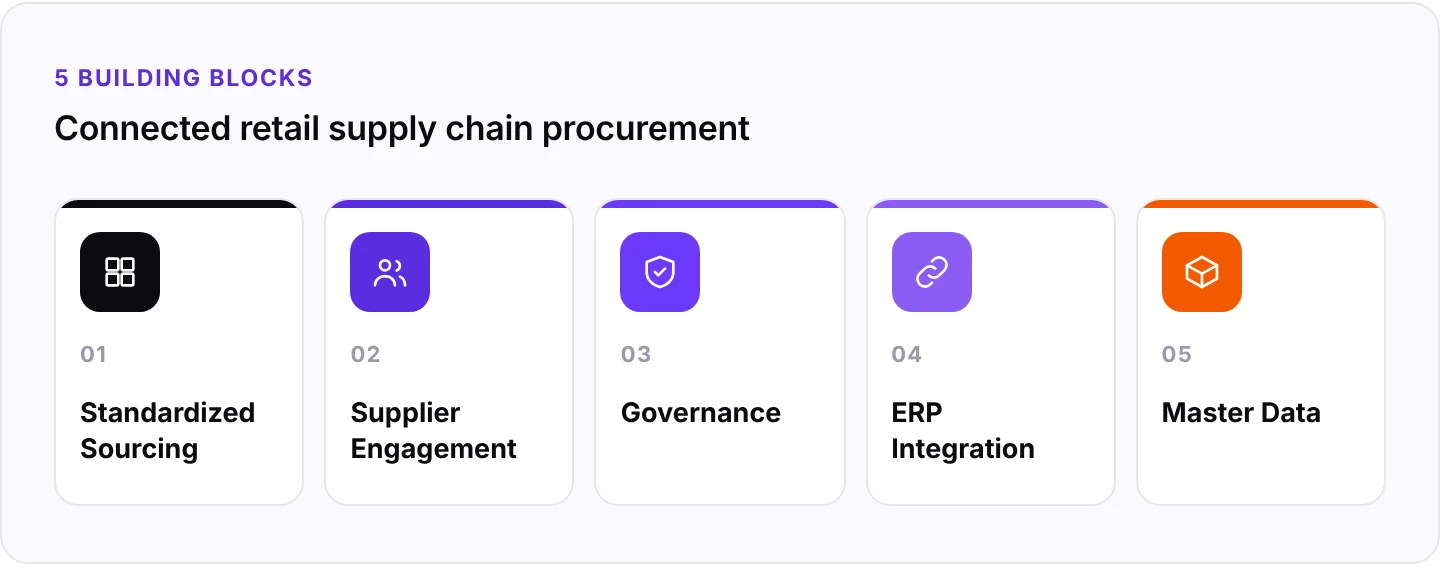
More standardized sourcing
A common RFQ workflow helps buyers follow a consistent approach across business units and locations while giving procurement teams better visibility into sourcing activity.
More structured supplier engagement
Digital sourcing, competitive bidding, and negotiation workflows provide procurement teams with a more organized way to engage suppliers and evaluate commercial responses.
Greater procurement governance
Defined award workflows make it easier to maintain visibility and traceability as supplier decisions move from evaluation through approval and award.
Better Source-to-Procure continuity
Connecting sourcing outcomes with SAP ECC helps reduce manual handoffs and creates a clearer path from supplier selection to purchase order execution.
More consistent procurement data
Connecting supplier and product master information with procurement workflows supports better data quality and reduces unnecessary manual maintenance.
From individual sourcing events to an enterprise retail supply chain model
At the scale of 40,000 buyers, 50,000+ end users, 4,00,000+ suppliers, and 20,000+ locations, procurement transformation cannot stop at digitizing a single sourcing activity. The larger opportunity is to create a connected process that links sourcing decisions with supplier management, purchasing, systems, and data.
In this case, the journey starts with a buyer creating an RFQ. Suppliers participate, procurement teams evaluate responses, negotiations take place, and a supplier is selected. The outcome then moves into SAP ECC for purchase order execution, while supplier and product information remains connected throughout the process.
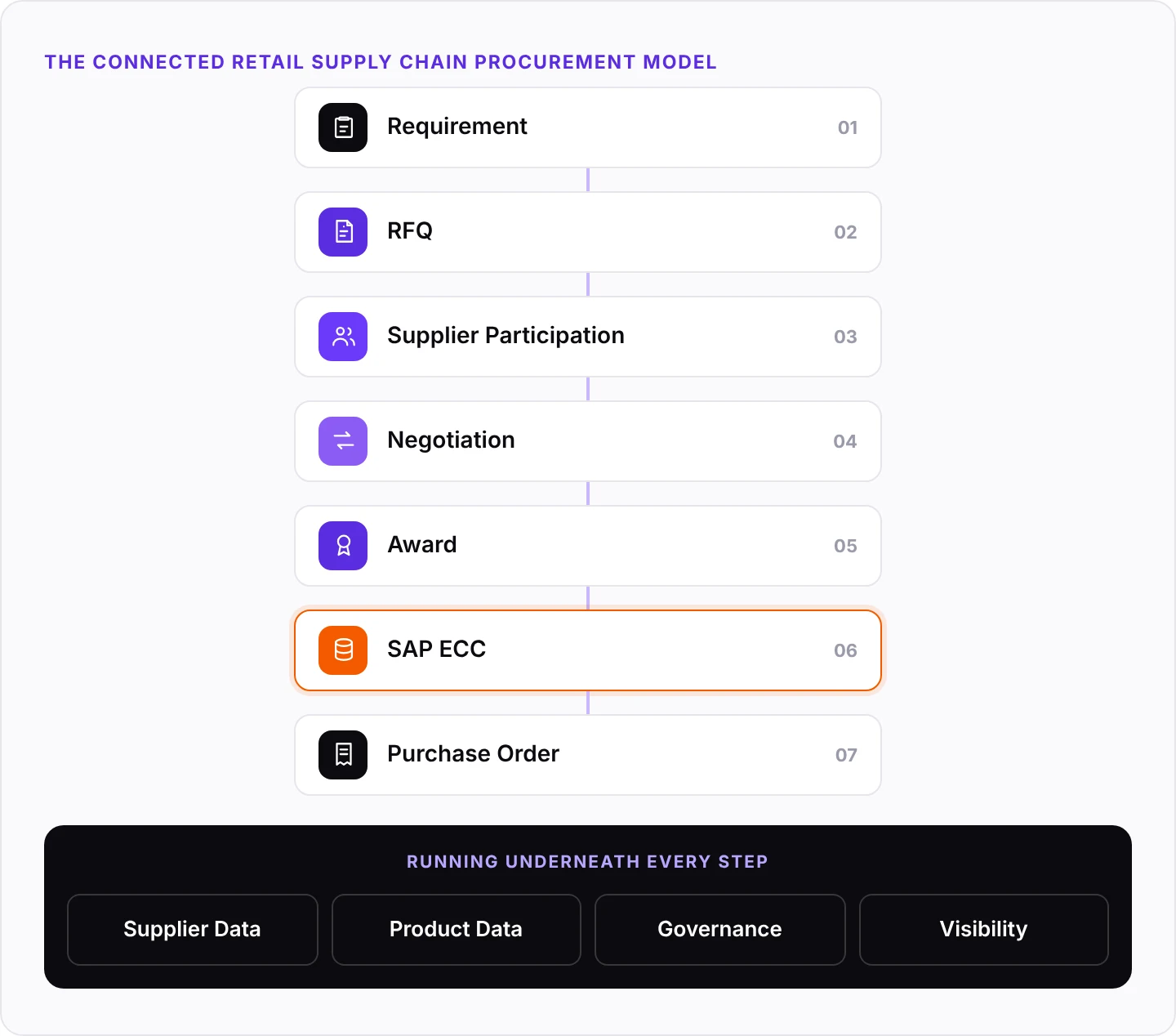
Aerchain provided the digital workflows and integrations supporting these stages, but the larger transformation was operational: creating a more standardized and connected way for procurement teams to manage sourcing at enterprise scale.
For a large retail organization, this creates a procurement model that is better connected to the wider retail supply chain without removing the role of procurement teams in supplier evaluation, negotiation, and decision-making.
Conclusion
A scalable retail supply chain depends on more than efficient movement of products. Procurement also plays an important role in connecting business requirements, suppliers, sourcing decisions, and purchasing execution.
For this organization, managing 40,000 buyers, 50,000+ end users, 4,00,000+ suppliers, and 20,000+ locations required a more connected approach to procurement.
By bringing RFQ management, supplier engagement, negotiations, award workflows, SAP ECC integration, and master data into a connected process, the organization created a more standardized approach to Source-to-Award procurement.
Aerchain supported this transformation through the digital workflows and integrations needed to connect these activities, while procurement teams remained central to supplier evaluation, negotiation, and decision-making.
The result is a procurement operating model that can better support the scale and complexity of a modern retail supply chain.
Frequently asked questions
What is a retail supply chain?
A retail supply chain is the network of suppliers, procurement processes, purchasing activities, logistics operations, inventory processes, distribution channels, and systems involved in moving products from suppliers to stores or end customers.
What are the biggest challenges in retail supply chain management?
Large retail supply chains need to coordinate many suppliers, buyers, locations, products, sourcing events, and purchasing activities. Maintaining visibility, consistency, supplier participation, governance, and accurate procurement data becomes more difficult as the organization grows.
How can retailers improve retail supply chain efficiency?
Retailers can improve supply chain efficiency by standardizing procurement workflows, centralizing sourcing activity, improving supplier collaboration, structuring negotiations, connecting sourcing with ERP systems, and maintaining consistent supplier and product data.
What role does procurement play in the retail supply chain?
Procurement connects business requirements with suppliers and purchasing processes. It covers activities such as sourcing, RFQ management, supplier participation, negotiation, supplier selection, award management, and purchase execution.
How can retailers manage thousands of suppliers?
Retailers can use centralized sourcing workflows, digital RFQs, supplier collaboration, competitive bidding, negotiation management, award workflows, and integrated supplier information to manage large supplier networks more consistently.
How does procurement automation support retail supply chains?
Procurement automation can reduce manual effort across activities such as RFQ creation, supplier engagement, bid management, negotiations, approvals, and awards. This allows procurement teams to focus more on sourcing decisions and supplier relationships.
Why is SAP integration important for retail procurement?
SAP integration connects sourcing activities with downstream purchasing processes. In a Source-to-Award workflow, it can help move supplier award outcomes into SAP for purchase order execution and reduce manual handoffs.
What should retailers look for in a retail supply chain procurement platform?
Retailers should consider whether a platform can support sourcing, supplier collaboration, competitive bidding, negotiations, award management, ERP integration, procurement governance, and supplier and product master-data integration.

Ready to Source Autonomously with Aerchain?
Explore the power of AI Agents in transforming procurement processes.